



President Donald Trump publicly signaled hesitation about moving Kevin Hassett to the Federal Reserve, casting doubt on Hassett’s chances to succeed Jerome Powell as Fed Chair.
Speaking at a conference, Trump said he wants to keep Hassett in his current role, citing concerns about losing a trusted adviser if Hassett were sent to the Fed.
Sponsored
Sponsored
Kevin Hassett’s Chances Cool
That remark immediately reshuffled expectations around the next Fed chair. With Hassett’s odds slipping, attention has shifted to Kevin Warsh, now viewed by markets and Washington insiders as a leading contender.
Hassett had been widely discussed as a top replacement for Powell ahead of the May 2026 transition.
Trump’s comments, however, suggest a preference for continuity inside the White House rather than a move to the central bank.
As a result, prediction markets and analyst chatter have moved away from Hassett in recent days.
Sponsored
Sponsored
Kevin Warsh Moves to the Front
Kevin Warsh brings prior central-bank experience, having served as a Fed governor during the global financial crisis. His profile has long appealed to Republicans who want credibility with markets and a clearer separation between monetary policy and day-to-day politics.
Trump’s reluctance to part with Hassett has elevated Warsh into the top tier of candidates.
Crypto Lens: Warsh vs. Powell
On crypto, Warsh and Powell differ more in tone than in outcomes. Powell has maintained a cautious, institution-first approach, repeatedly stressing financial stability, consumer protection, and clear regulatory lines for stablecoins and exchanges.
Sponsored
Sponsored
He has avoided endorsing crypto as money while allowing markets to develop under existing rules.
Warsh’s record points to pragmatic skepticism. He has acknowledged Bitcoin’s potential as a store of value, often comparing it to gold, but he remains wary of private cryptocurrencies functioning as everyday money.
That stance suggests tighter guardrails rather than outright hostility. Compared with Powell, Warsh may sound more open to debate on digital assets, yet policy outcomes would likely stay conservative.
Powell’s Clock is Running Down
Powell’s term as Fed chair ends on May 15, 2026. He can remain on the Board of Governors until 2028, though chairs rarely do so after stepping down.
Sponsored
Sponsored
With inflation easing but not fully defeated, markets expect limited room for major policy shifts before his departure.
Traders increasingly price one more rate cut under Powell before the transition, assuming data cooperates.
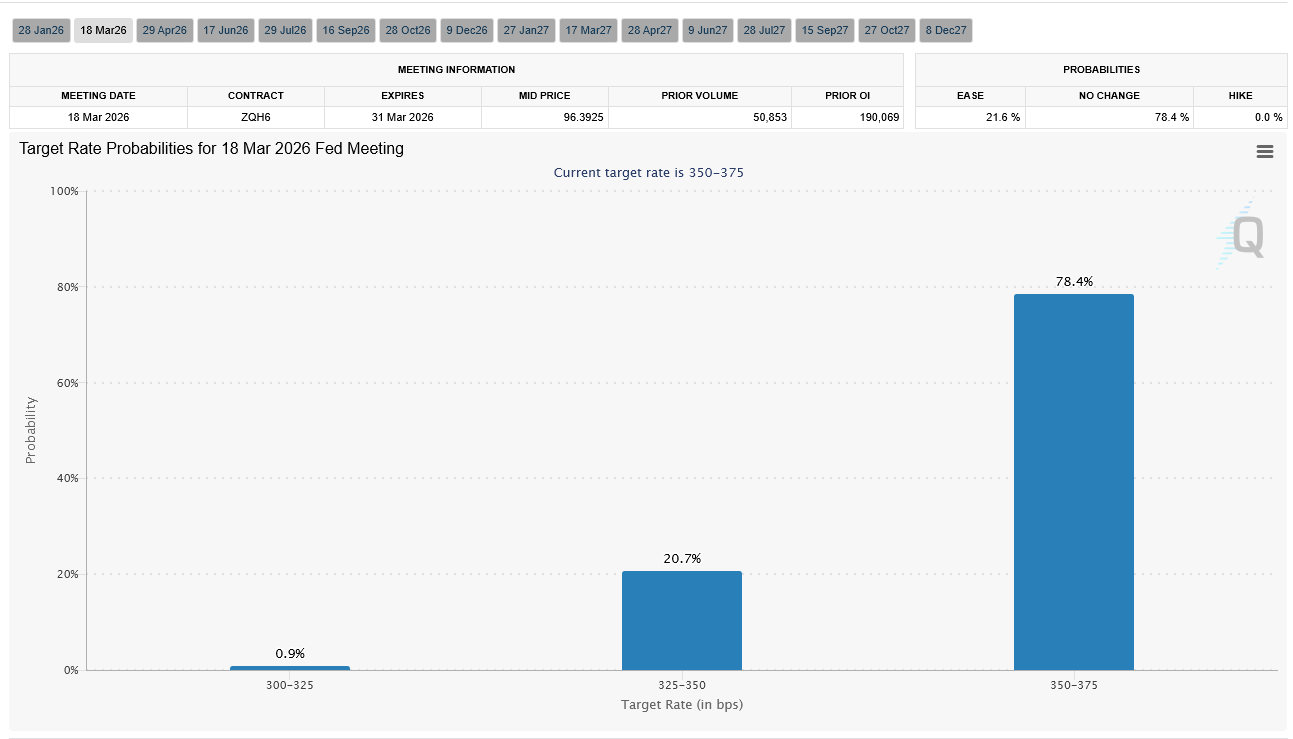
Any larger pivot now appears unlikely, reinforcing the sense that the next chair will define policy direction for 2026 and beyond.
Meanwhile, Powell faces an unusual political backdrop. A Department of Justice probe tied to his congressional testimony on cost overruns for the Fed’s headquarters renovation has included subpoenas for records.
Powell has said the matter does not affect monetary policy. Yet, the investigation has intensified debate over central-bank independence as the leadership change approaches.
